Friday, May 24, 2019

Off to Enfilade

I've been somewhat neglectful of my blog lately. I could list a bunch of reasons why this happened - but that would be a boring read, so I'll just leave the facts to stand as is.

Memorial Day weekend is here, which means time for the annual Enfilade gaming convention.

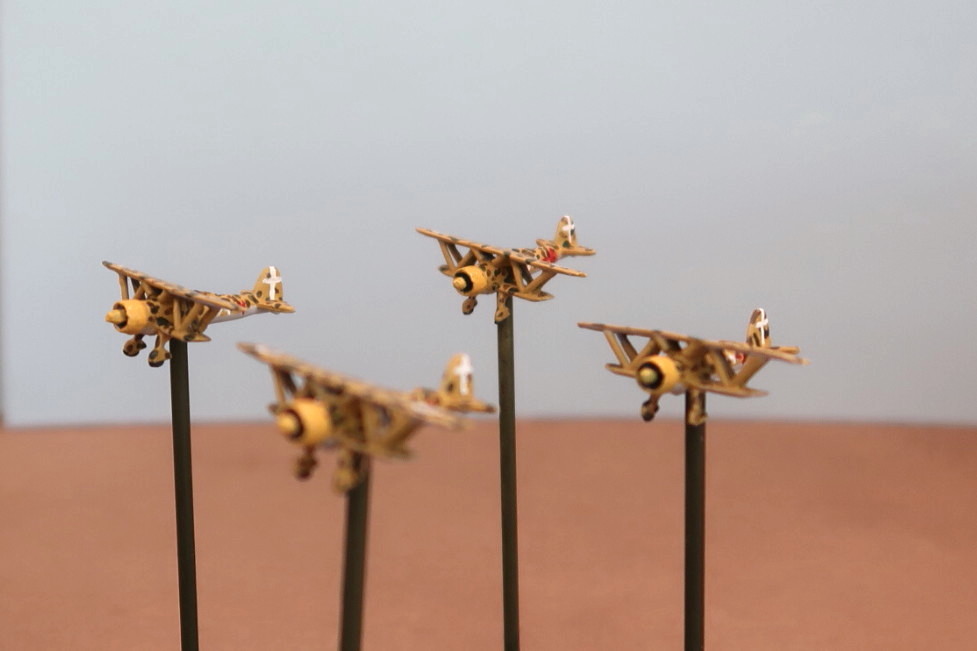
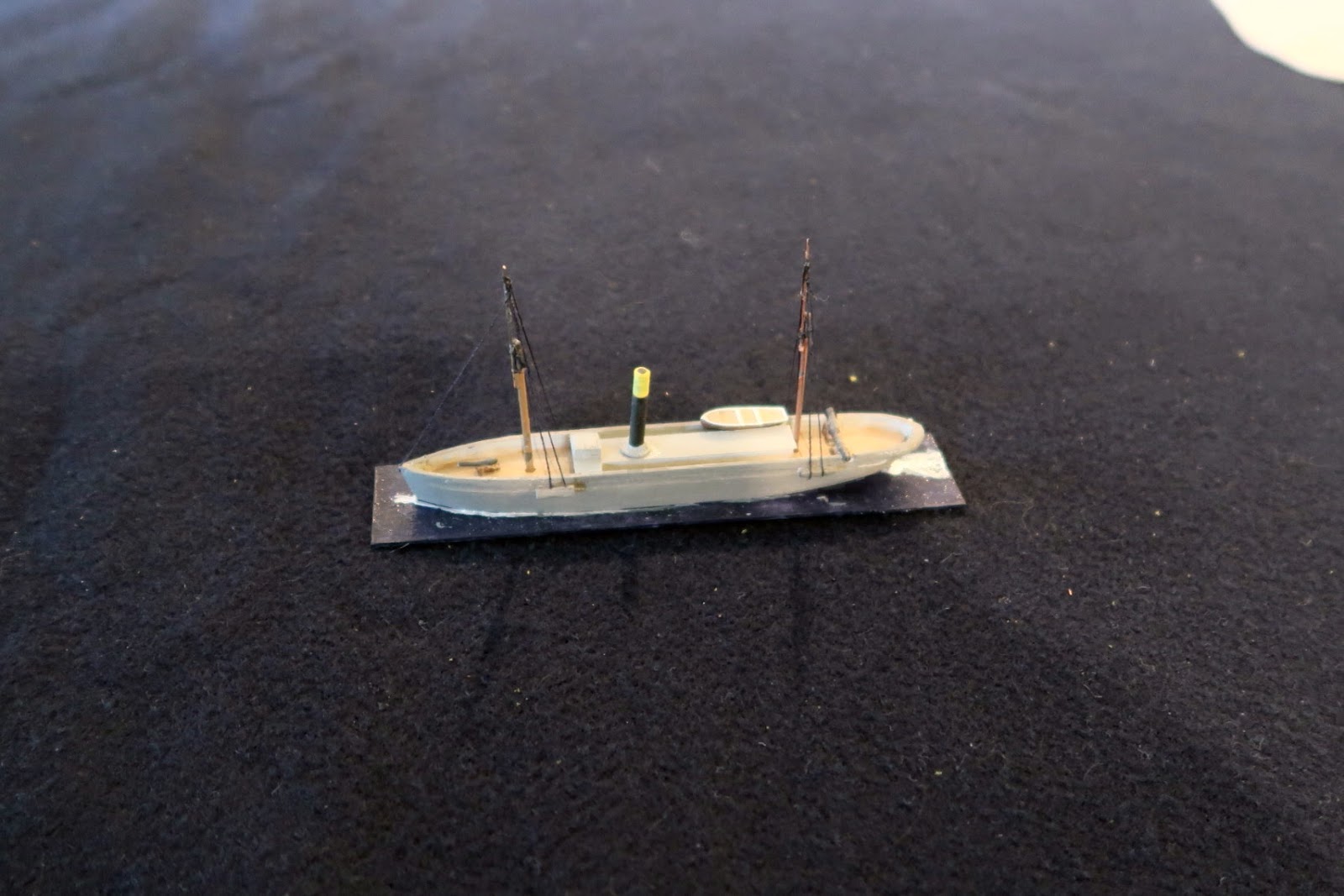
This year Kevin and I are running a reprise of the Operation Tungsten game (a Fleet Air Arm attack on the German battleship Tirpitz) and an Italian bombing attack on Malta Harbor. Both games will use David Manley's unpublished Air War 1940 rules.
A photo from the first Tirpitz game.
An earlier Italian raid on Malta Harbor
Additionally, I'll be helping out with Retreat from Concord game, which uses the Rebels and Patriots rules (with some special rules). You can see photos and a description of the last playtest here.

I may not get much playing time, but I am looking forward to seeing all the figures and games. I'll be taking lots of photos from the convention, so expect to see my annual Enfilade photo posts coming soon.

Sunday, April 7, 2019

Work In Progress Updates

I’ve been slowly working on a few different things over the past month, but my work has been pretty unfocused as I try to figure out which direction to go. In the past month I’ve worked on plans for Enfilade, Cruel Seas 1/300 ships, 1/600 ships, 15mm tanks (for What a Tanker), and 28mm Arabs. I’m getting close to finishing up the ships, but the other items are definitely fall into the “In Progress – Not Ready to Show” category.

In the “Complete and Ready to Show” category, my Cruel Seas bonus diving U-boat. Here a are couple photos.
Dive! Dive!
And from the port side
I tried to weather the model and add lots of whitecaps to the water. I like the model, although I feel bad for the two guys manning the 20mm. I did paint life-jackets on them, but I’m not those will really help. I’m also not sure where the diving sub would get used in a game, but I’m sure someone will come up with a scenario.

Next up, in the Not Complete – Okay to Show” group are five primed and ready to paint 1/600 scale merchants from Heroics & Ros. These ships are from the old Skytrex coastal force line.
The 4,000 ton cargo ship (left), the 5,500 ton cargo ship (center), the the 4,500 ton oil tanker (right)
A 3,000 ton tramp (left) and a 2,800 ton tramp (right)
The whole group
The models are nice and went together easily, with resin hulls and metal details. The resin hulls make sure the ships aren’t too heavy. I expect they will get the standard dark gray/black hulls with light/medium gray superstructures.
These ships will serve double-duty for me as targets for air attacks and targets for coastal forces games. Overall, these were good investments with a lot of potential for use.

Resetting my efforts 
One of the things I wanted to do this year was be more focused on projects. Instead, this year has been a lot of jumping around to a lot of projects.

I’m keeping the 1/300 air and 1/600 ships at the top of my projects list. All the must have items for the planned Enfilade games are done, but it will be nice to have some extra ships and planes that could be thrown in to mix things up a bit. This includes finishing up the H & R merchants and the aircraft that are halfway done.

My other projects will be pushed back for now and I’ll decide what to do after I finish up the ships and planes.

That said, I have a special mention for Cruel Seas. After being distracted by this shiny object and waffling around on what I would do with it, I decided I didn’t want to redo the same ships in the new scale and would concentrate my 1/300 scale efforts on an area where I don’t already have many 1/600 scale ships – the Black Sea (and Baltic Sea). With that in mind, I’m going to set aside the Cruel Seas ships until a few more Russian and German ships come out. I really need to read up on this front a little more before deciding what ships I’ll want to get. But I’ve seen German R-boats and MFPs are coming soon and I hope there will be some Russian MO patrol boats (although there is always the option of getting the H & R Soviet BMO patrol boats).

Sunday, March 10, 2019

Completed Targets for Cruel Seas

After a busy and distracting February, I've finally finished up my 1/300 coastal freighters. I would still like to do some weathering and touch-ups on the ships, but they are basically done and in good enough shape for a game.
Coastal freighter ready for convoy duty
If you read my previous post, you may recall that I decided to scratchbuild some target ships to go with my Cruel Seas models. I didn't really want to invest much money in this project, so I decided I only wanted to use materials I had on hand for the ships. So the ships are made from basswood, balsa wood, and plastic sheets and rods. I would have liked to add some more details, however my other ship building is done in 1/700 and all the spare parts I had looked to small on the freighters. This is one reason there are no lifeboats, which I'm sure those of you that are sharp-eyed have already noticed.

A 3/4 bow shot for a slightly different view
The ships all have the same basic hull size and shape. Two ships have aft bridges (these are essentially the same ship with only the mast positions changed) and the third has a center bridge.

So how do they compare to the Warlord Games models? Here is a shot of them with some German Schnellboots.
Hunters and targets
And with the merchant counter that comes in the Cruel Seas starter kit (I assume this is about the size of the tanker sold by Warlord Games).
Flat and 3D targets
Overall, the ships turned out okay. While not very detailed, they do give a decent representation of coastal freighters and will make decent targets for 1/300 scale attackers. Plus the price was right.
One more comparison photo
On a mostly unrelated subject, I don't have a Facebook account and for the most part I haven't seen the need for one. I can usually look at open groups (like the Naval Wargaming group) and various manufacturers/vendors, even though I can't post to them. Lately though I seem to be missing out on some of the local gaming notices because the local group is closed. I was wondering if I should just bite the bullet and join. But I really don't need something else to take time away from already limited free time, so I think I'll stay in the dark for a while longer. That said, if any readers feel like posting any of my blog posts or photos to the appropriate Facebook groups, I'm sure I would enjoy the cross-traffic.

Tuesday, February 5, 2019

Targets for Cruel Seas

I've (finally) started putting together the ships from the Cruel Seas starter. But as I started, I realized that I really needed some targets for the coastal forces to go after. There aren't a lot of 1/300 (or 1/350) scale models of World War II coastal merchants out there, so I thought I might try my hand at scratchbuilding some ships. While my work won't be as good as the ones the Virtual Scratchbuilder posted on The Miniatures Page, I expect they will be just fine (for targets).

I started an Internet search for British 1930-40s coastal freighters to get some inspiration and plans. During my search I came across some interesting stuff, such as the U.S. Navy book on Merchant Ship Shapes and plans for a coastal tanker that look a lot like the Warlord Games merchant tanker, but I didn't find any good plans for coastal freighters. I did come across several photos (1 and 2) and decided to base my ships on those, while using some "artistic license" for the details. I decided to build one ship with a center bridge and two with aft bridges.

I started out with basswood to make the base shape for the lower hull and then started adding balsa to build up the forecastle and superstructure. I'll use some sheet styrene for thin flat areas (like the decks for the bridges) and ship sides. The ships are almost 7 inches long (like the cardboard counter frigther stand-in included in the starter set).
3/4 view
Profile view
The ships are starting to come together nicely (although the photos show I need some filler), so I feel like I'm off to a good start. I still need to add the sides, cargo hatches, booms, and some extra details.

I'll post some more photos when the ships are done.

Sunday, January 20, 2019

Book Review - In the Hurricane's Eye

 In the Hurricane's Eye, The Genius of George Washington and the Victory at Yorktown is the final book in Nathaniel Philbrick's coverage of the American War of Independence (the previous books are Bunker Hill and Valiant Ambition).

The book starts out talking about the three major hurricanes that happened in October 1780. These hurricanes ravaged the Caribbean and Gulf of Mexico. The worst storm had winds estimated at 200 miles per hour, killed over 22,000 people, and damaged or sank British, French, and Spanish warships. These storms give the book its title. Philbrick goes on to talk about the current situation for both sides of the war and the importance of ships for movement and resupply, setting the stage for the rest of the book.

The next event covered is Benedict Arnold's (now serving in the British Army) attack into Virginia along Chesapeake Bay. George Washington sends the Marquis de Lafayette with a small army to oppose Arnold. Washington also talks the French into committing their fleet to try to trap Arnold. The Royal Navy catches wind of the French fleet's movements and races to intercept them, leading to the Battle of Cape Henry. While the French are unable to move into Chesapeake Bay, they do major damage to the British fleet and Philbrick suggests the French missed a chance to change the war here.

The book then moves to the British Army's campaign in  South Carolina and North Carolina. It covers the battles of Cowpens and Guilford Courthouse as General Cornwallis moves the British army north into Virginia. With the British settling in around Yorktown, the American and French saw an opportunity to trap Cornwallis.

At this point in the war, Washington was still hoping to retake New York from the British. However, the French generals and the strength of the British position around New York City finally convinced Washington that taking on Cornwallis was the best course of action. So, the combined armies headed for Virginia. But they still needed the French fleet to prevent resupply or evacuation of Cornwallis' army. While the allied armies raced toward Yorktown, the British and French fleets were racing to get into position at Chesapeake Bay.

The French fleet, under Admiral De Grasse, was being tracked by the British fleet, led by Samuel Hood. But the British were uncertain of De Grasse's final destination - was it Chesapeake Bay or New York? The British fleet was slightly faster than the French fleet and beat them the the bay. But when they didn't see any French ships, they decided to head for New York.Once the British fleet arrived in New York, it joined up with the ships there and turned back to Chesapeake Bay, where the French were waiting. Setting up the Battle of the Chesapeake (also known as the Battle of the Virginia Capes). The book describes the battle and aftermath, with the British falling back to New York and leaving the French in control of the bay.

With the British sealed up in Chesapeake Bay, the book moves to the siege of Yorktown. The overall action is described, along with the final decision to surrender. This essentially ended the fighting in North America.

The remainder of the book follows up on the final resolution of the revolution, the troubles in the American army and Washington's efforts to keep the American army in line. The book ends with a chapter that gives a short description of what happened to each of the main characters in the story. 

Overall, In the Hurricane's Eye is a good general history of the last years of the American Revolution. It does a good job of describing the situation, the personalities involved, and the events. The book is easy to read and I would recommend it to anyone with an interest in the American Revolution, although you might want to start out with Philbrick's Bunker Hill and Valiant Ambition.

For gamers, the book provides you with information on the major battles, especially the sea battles, for putting together some interesting scenarios and alternative battles. But you will probably need to go to other sources for more details on the troops and ships available at the time.

Sunday, January 6, 2019

Annual Review and Preview (Belated)

As the calendar turns to 2019, I will jump on the review/preview bandwagon and take a quick look back at 2018 and forward to 2019.
Before I start that, I again want to thank all of you that regularly (or not so regularly) read my blog. I’m not always good about posting, but I really appreciate your views and comments about what I'm doing. So, thanks for reading. 

Reviewing 2018 

I had limited goals for 2018 and not a lot of new projects showed up during the year. The early part of the year was taken up with work on the two joint games with Kevin for Enfilade 2018. First up was the Illustrious project, which covered the air attack on HMS Illustrious on January 10, 1941 during Operation Excess convoy to Malta.
HMS Illustrious and HMS Nubian for the project
Overall, I had a good time with this project. It was fun to go through the research, find the appropriate ships and aircraft, and paint up the ships. I think the playtests and Enfilade game went well. This was definitely a successful project.
Illustrious under attack by SM.79s
Next was the Falklands - Attack on San Carlos game. This was an easy project that really only required me to clean up my Falklands models and come up with a challenging scenario. I worked through a lot of options for the game and I felt like the final scenario gave both sides enough choices to make the game interesting. As with the Illustrious game, I think the game played out nicely at Enfilade.
Argentinean A-4s attacking HMS Antelope
After Enfilade, Kevin and I settled into painting planes for a semi-successful Malta air war project. We both painted up a number of aircraft (although mine started shifted to the Western Desert) and played a few (but not enough) games.
CR.42s for Malta and Western Desert
During summer, I had the chance to play some Song of Drums and Tomahawks, What a Tanker, and some solo naval action for International Naval Wargaming Day.
Spanish-American War for International Naval Wargaming Day
After summer, there was the NHMGS game day at the Museum of Flight and DANG. Both of which went well.

Looking back on 2018, I didn’t get much done in the way of other projects. I’ve got number of figures and ships that are partially completed, so I’m a little disappointed I didn’t finish those. On the brighter side, I did more blog posts this year than I have since 2011. I also picked up a Cruel Seas starter set, which gives me a few ships to put together, but I’m not sure how far I will get into the new larger coastal forces scale.

Overall 2018 was a good year for gaming. 

Previewing 2019 

As with 2018, I’m still a little short-handed at work and expect work to suck up a lot of time. So, I’m not anticipating a lot of extra time for projects and will keep my expectations low.

Kevin and I are planning a couple air games for Enfilade using David Manley’s unpublished Air War 1940 rules (which reminds me that I need to send some more play notes to him). The first will be a revamped version of the attack on Tirpitz game from 2013 and the second will be an air battle over Malta, revising and improving some of our 2018 games. Because most of the ships and planes for these are already done, they should be fairly easy projects.

For other projects, I would like to get back to my modern submarine rules and let a few people look at/comment on the rules and ideas. I’m considering running a rule playtest game at Enfilade this year to get me motivated again.

I also want to focus on finishing up some half-finished projects (Western Desert air war, Lion Rampant Muslims, etc.), along with some coastal force stuff (yes, I’ll do some Cruel Seas stuff).

Other Odds and Ends – I want to get in more face-to-face gaming this year, so that might take priority over some of the half-finished projects. As usual, DANG will take up the last couple months of the year and since I let the gamers vote on the project, it is hard to know what it will be. I’m also sure there will be some other new, bright, and shiny game/object that will take my attention.

Overall, nothing to tough or strenuous is planned for 2019, which should make it easy to meet the goal.

Monday, December 31, 2018

DANG 2018 - The Siege of Charleston

This year’s DANG (Dave's Annual Naval Game) was The Cradle of the Rebellion – The Siege of Charleston. The game covered Union attacks on Confederate fortifications and the blockade of Charleston, South Carolina between July and September 1863. Historically, there were only a couple very minor naval skirmishes during this time. But Confederate General P.T. Beauregard, who oversaw Charleston’s defenses, had requested that the Confederate ironclads attack the Union forces to break the attack on the forts, setting the stage for a nice hypothetical action.
A little something to get players thinking about the action
Everyone began arriving at my place around 9:30 AM and we spent the next hour catching up on things and talking about the projects we are all working on and planning.
I too a pre-game photo of George's Housatonic, since I wasn't sure it would get into a battle
After that we split into two sides with three Confederate players (David S, George, and Arthur) and five Union players (Kevin, Bill, Dave C, Dale, and Scott).

The Union players had to pick an avenue of attack (Sullivan Island or Morris Island) and work to reduce the Confederate forts and batteries along that route so the Union Army could capture the island, while maintaining a tight blockade on the city. The Confederate players got to choose the ships for their fleet (based on available designs and limited resources) to support their fortifications and blockade runners.

Each campaign game turn represented action for a week, with the campaign lasting for a maximum of 8 weeks. During a campaign turn, each side assigned their ships to missions for the week. The missions included attacks on enemy ships, bombardment of the fortifications, escorting supplies or blockade runners, and blockade duty. After resolving the missions, a check was made to see how far the Union Army advanced during the week.

With the background and rules covered, both sides selected their ships for the campaign and the Union players decided to assault Sullivan Island (a departure from history). We started the first week with two potential battles – one over getting supplies through to Sullivan Island and the other in a blockade zone.

In the first battle, the Union sent a monitor and two 90-day gunboats to stop the Confederate resupply run. The Confederates got an early warning of the approaching ships and called out their ironclads to support the wooden cruiser that was covering the resupply. This was a night action, so visibility and firing ranges were short.
Union monitor and two 90-day gunboats hunting for rebel supplies
Confederate cruiser escorting the supplies
The Confederate ship, CSS Ajax, kept its distance as the Union ships approached. But the appearance of two ironclads, CSS Palmetto State and Chicora, changed the situation.
CSS Palmetto State
The ships traded shots, but an early critical hit on the gunboat USS Chippewa slowed down the gunboat, allowing Palmetto State to close.
Things don't look good for Chippewa
Chippewa tried to run, but it kept taking hits. Eventually catching on fire and then surrendering. Outnumbered in ships and ironclads, the remaining Union ships decided to withdraw from the action. The Confederates had some light damage done to their ships, but were happy with the overall results of the battle.
Chippewa on fire and running out of luck
In the blockade zone, the Confederates spotted three Union ships and the escort decided to cut loose the blockade runners and return to Charleston. The Union ships went after the blockade runners – catching one while two others escaped into the night.

With the missions resolved, the results of the Union Army advance were Checked. Sullivan Island had seven batteries (four small and three medium size) and Fort Moultrie. The Union troops landed at the north end of the island and on the first week took two batteries.
Battery Marshall and Battery A fall during the first week
Seeing the Union advance on Sullivan Island, the Confederate defense council talked over the best ways to slow the advance. They knew they had limited ships and that the Union could easily withstand or replace their losses. Talking through their options, they believed their best option was to make a major attack on the Union ships bombarding Sullivan Island, which they hoped would stall the Army’s advance. The Charleston shipyards had promised to deliver three new gunboats and an ironclad over the two weeks. So, the decision was made to wait two weeks and then conduct a daytime attack on the Union ships off Sullivan Island with all their ships in the Charleston fleet.

On the Union side, the initial plan seemed to be working – so they maintained their blockade and bombardment strategy. This set up the naval battle of Sullivan Island.

The Confederates sent their whole fleet out for the early morning attack – the ironclads Palmetto State, Chicora, and Milledgeville (a hypothetical ironclad design), the wooden cruisers Ajax, Tallahassee, the cottonclad sidewheeler Calhoun (based on the CSS Oregon), along with two Drewry type gunboats named Ashley and Cooper. On the Union side, the bombardment group was made up of the New Ironsides, the Passaic class monitors Passaic, Lehigh, and Catskill, and the sloop Housatonic.
Union bombardment force arrayed for battle
Confederate gunboats and Palmetto State
The rest of the Confederate ships
The battle started off with the Tallahassee trying to use its speed as armor and get behind the Union line. But long-range fire from Union ships damaged the cruiser, set it on fire, and eventually forced it to surrender.
Tallahassee taking early damage
Tallahassee on fire and screwed
The other confederate cruiser, Ajax, did not have much luck either. Ajax got a little to close to shore and ran aground, then was pounded by Union monitors as she was trying to get up to speed.
Ajax aground
Ajax under attack from the monitors
On the other side of the Confederate fleet – the gunboats Cooper and Ashley moved forward and took shots are the trailing Housatonic. The gunboats hit the sloop several times and started several fires.
Housatonic takes some damage
But the Housatonic’s well-trained crew was able to put out the fires and return fire on the gunboats, inflicting a magazine critical hit on one and damaging the other.
Gunboat goes boom
In the center, the three Union monitors moved to take on the Confederate ironclads, while New Ironsides provided long-range support.
Confederate ironclads move forward
Closing with the Union monitors
The Calhoun steered clear of the center, taking long-range shots at the Union ships. But return shell fire set the cottonclad on fire. Other damage would slow down the sidewheeler, putting the ship out of action.
Cottonclad on fire
The iron ships traded shots, with the Union's 11 and 15 inch guns causing heavy damage to the Confederates and a critical steam line hit on Milledgeville.
Ironclad close action
Steam line damage to Milledgeville
Chicora took heavy waterline damage from a New Ironsides broadside. Damaged and slowly flooding, Chicora almost rammed Housatonic (or maybe it was the other way around), but her fate was sealed as she was caught between the two big Union ships.
Chicora and Housatonic slide by each other
Chicora caught in the middle
With most of the Confederate ships heavily damaged or out-of-action, the remaining forces announced a withdrawal, ending the battle.

The Confederates did succeed in disrupting the Union fleet’s support of the land action for the week, but it was at the cost of most of the Charleston Fleet.

With our gaming time drawing to a close, we decided to roll off the rest of the Union Army advanced for the remaining weeks of the game. Both sides made die rolls to support their land forces (Confederate resupply and Union bombardment and Army assaults). At week 8, Fort Moultrie was the only Confederate fortification left on the island and the Union players rolled their final attack – but it failed (the Union side needed to roll an 84 or higher on a d100). The Confederates won the overall campaign, but their fleet and most of Sullivan Island were in ruins. If this was a historical situation, the Union probably would have stopped the attacks on Charleston and pursued attacks elsewhere along the east coast, leaving the city for Sherman to attack.
The land map showing Fort Moultrie still in Confederate hands
Another DANG is in the books. Overall, the game turned out pretty well and everyone seemed to have a good time. We used Sail and Steam Navies for the tactical battle rules. They worked out fine, but the Confederates did not really have much of a chance against the Union monitors. We did talk about how the battle might have turned out if we had used different rules and the game seemed to rekindle some interest in the era. So, we might seem some more ironclads battles in 2019.
DANG 2018 players